
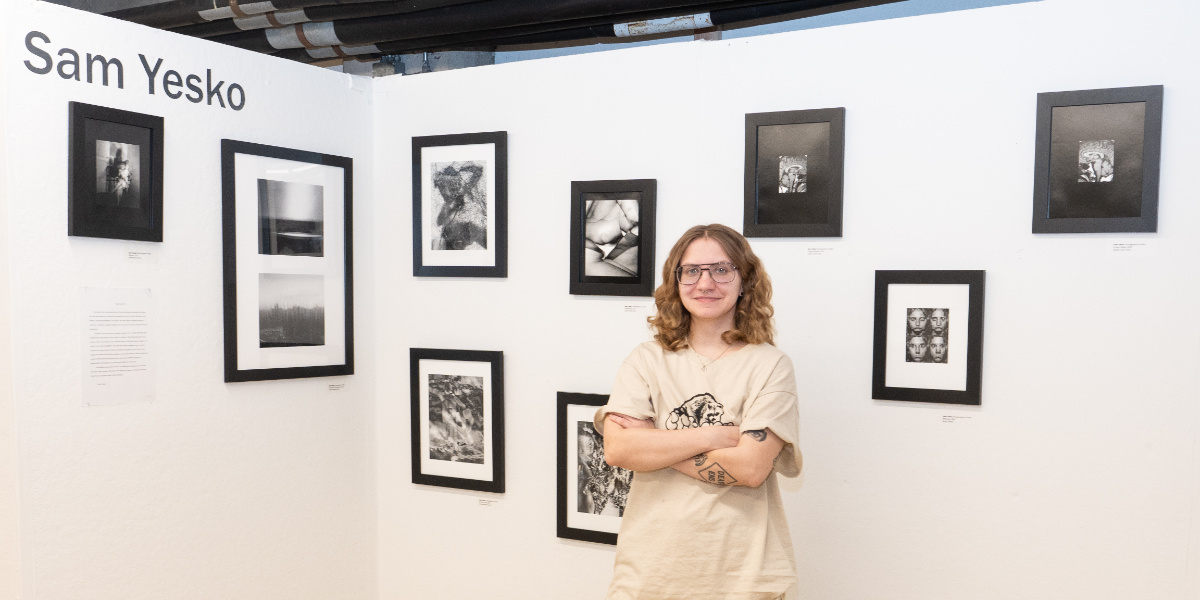
PCA&D Photography Grad Sam Yesko ’26 Is Already Exhibiting Nationally
Wednesday, August 5th, 2026
Showing work in Philadelphia and Los Angeles, months after earning their Photography & Video BFA
Just months after earning their BFA in Photography & Video from Pennsylvania College of Art & Design (PCA&D) in Lancaster, Sam Yesko is already exhibiting coast to coast. The May 2026 graduate has work on view at the Salzmann Photography Center in Philadelphia and the Los Angeles Center of Photography.
Yesko’s photography explores themes of identity with both technical precision and a distinctive point of view – the kind of individual vision PCA&D’s Photography & Video BFA program is designed to draw out. In a department small enough for one-on-one instruction, they studied under working professional photographers, exhibited their work while still a student and discovered their medium during PCA&D’s foundation year – the exploratory first year that lets students test drawing, illustration, game art and photography before committing to a major.
We sat down with Yesko to talk about their path through PCA&D, the mentors who coached them and the opportunities that shaped them.
Why did you choose PCA&D for your undergraduate studies?
I chose PCA&D because I wanted a challenge in my life. It was a school my teacher suggested to me back in high school, but I was in a gap year before I decided to go. I truly went on the flip of a coin. I was bored with community college and wanted something more – to not only discover a new place, but to discover more of myself.
How did PCA&D help you define the career path you wanted to pursue?
I took a 35mm Black & White Film class during my foundation year. At the time, I wasn’t sure what I wanted to major in and had many options in front of me, including fine art, illustration, and game art. I thought learning something new could help shape my direction as an artist, and I immediately fell in love with photography. I’m very thankful PCA&D has a foundation year to learn the basics of art. Since everyone comes in with different skills, it’s a great opportunity not only to strengthen fundamentals but also to discover things you might not have explored otherwise.
Tell me about the exhibitions you participated in while still a student. How did those opportunities come about, and what role did PCA&D play in helping you access them?
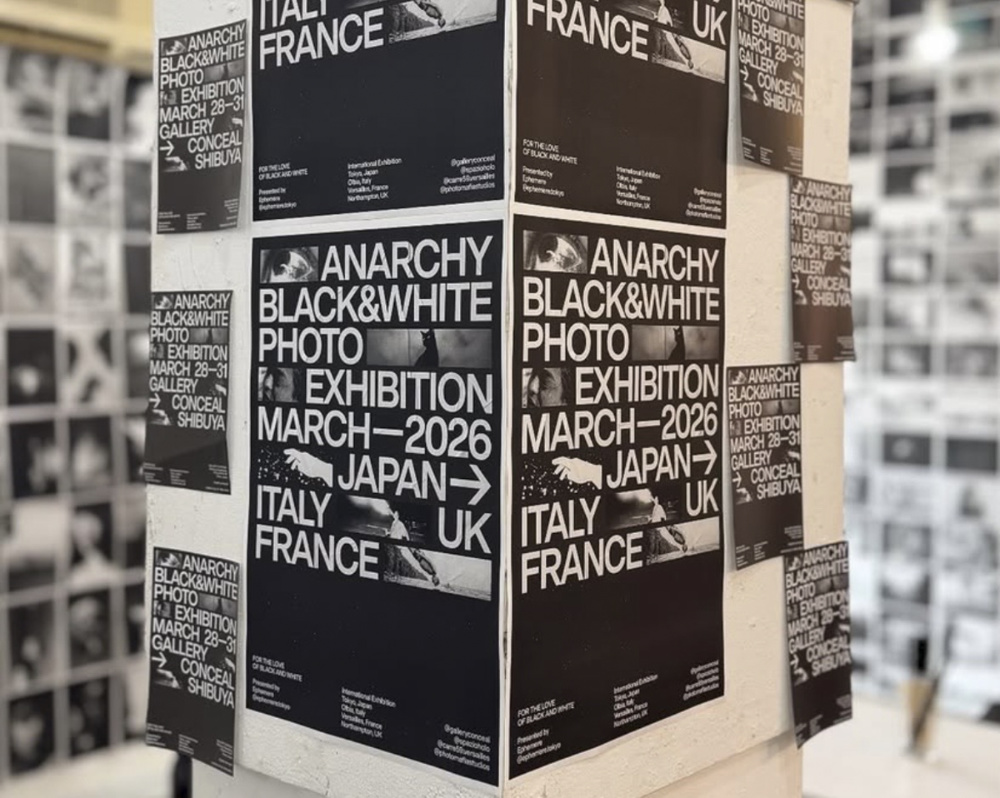
I discovered many opportunities on my own, mainly through social media, but it started with a conversation I had with my professor, Paul Rider, about exhibitions he had entered. That sparked my curiosity, so during the summer before my junior year, I applied to two shows – one in Maryland and one in Arizona. I wasn’t accepted into either and was really disappointed. Rider reminded me that rejection is a normal part of the process and encouraged me to look for exhibitions that aligned more closely with my work. I took that advice and did more research before applying again. When the same gallery in Arizona announced a show themed around self-portraiture, which matched the work I was creating, I entered and was accepted.
How did presenting your work to international audiences influence the way you developed and curated your portfolio after graduation?
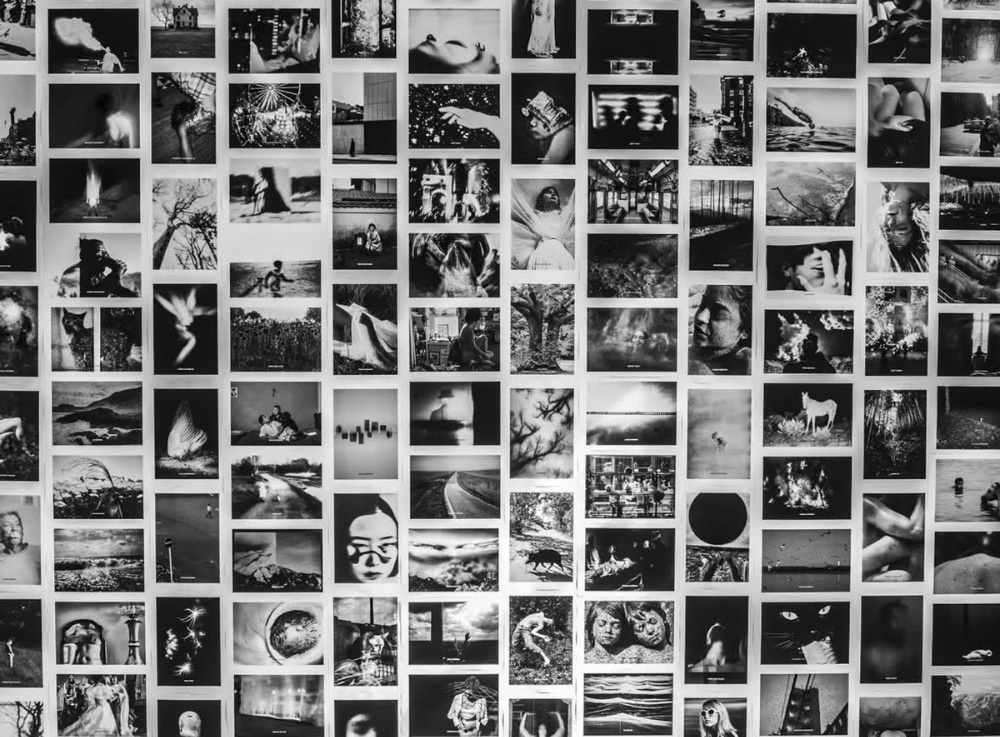
It helped me learn not only about trends in the art world, but also how artists my age are getting their work seen. Many submissions and even exhibitions are now online, but having work shown in person is a completely different experience. It gave me insight into how galleries curate works to create a cohesive exhibition. Since curating is something I hope to pursue in the future, seeing how different people approach it around the world helped me better understand the role trends play in contemporary art. While it’s valuable to be aware of what other artists are doing, I always ask myself: what will make my work stand out? What will make someone walk into a gallery and immediately say, “Hey, that’s Sam’s work”? Finding that unique visual language is something I constantly think about when developing a body of work.
Which PCA&D resources, faculty connections or partnerships were most valuable in helping you gain exposure beyond the classroom?
I have to thank my professors Eric Weeks, David Johanson, Paul Rider, and Jezabeth Gonzalez, as well as The Red Rose Film Festival in Lancaster. While attending PCA&D, I completed an internship with the festival through the Into the Darkroom Podcast. My mentor, Ryan Shank, helped me understand the importance of building connections. Through him, I met local Lancaster artists and filmmakers, as well as creatives from across the country and around the world. Those conversations were invaluable and gave me a deeper understanding of the film industry and the importance of collaboration.
The most valuable lesson I learned, however, was the importance of asking questions. Asking questions of yourself, your peers and your professors can help guide your direction, deepen your understanding of your work and encourage meaningful reflection on the creative process.
Why would you recommend PCA&D to a prospective student?
For me, it’s community. Everybody says it, but it truly is. My freshman year I was scared – as everybody is – but I got comfortable quickly, which I wasn’t expecting at all. It’s not just the students; it’s the professors, too. I feel like any professor there is someone you can talk to.
How did PCA&D prepare you not only as an artist, but also for today’s workforce?
Consistency. Consistently reaching out, consistently asking questions. Being able to reach out to others is really important. Striving to connect with others is the biggest thing that helped me move into work outside of school. Always striving, always asking – even if you don’t get it the first time. Keep trying.